Matching Indian Couple Outfits in Singapore: A Bride and Groom Styling Guide
Coordinate matching Indian couple outfits for a nikah, wedding, reception, or photoshoot in Singapore without making both looks identical.
By GlamourdollSG Styling Team
Quick answer
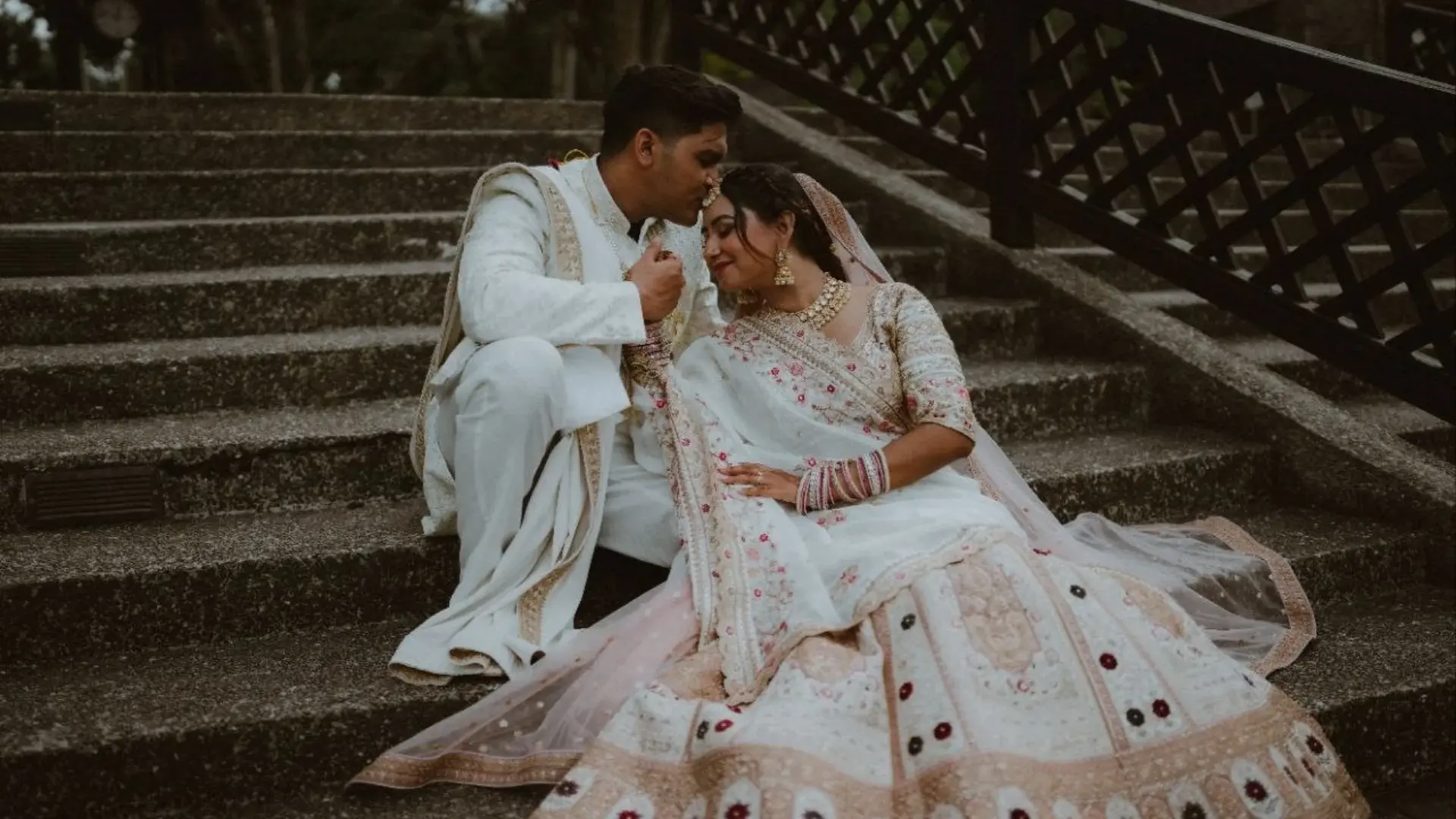
Matching Indian couple outfits do not need the same colour, fabric, and embroidery. The most polished combinations repeat one or two details—such as colour family, metallic embroidery, stole, or accessory tone—while allowing each partner to keep a distinct silhouette.
Start with the outfit that has the most design constraints, often the bridal lehenga or saree, then coordinate the groom’s sherwani or kurta through an exact match, a related shade, a complementary colour, or neutral styling with shared details.
Start with the more detailed outfit
Begin with whichever outfit has more colour, embroidery, or design limitations. This is often the bridal lehenga, saree, or Pakistani bridal outfit. Identify its main colour, secondary colour, embroidery tone, and fabric texture before choosing the groom’s look.
For example, a blush bridal lehenga with silver embroidery could work with an ivory sherwani with silver details, a charcoal outfit with a blush pocket square, a soft grey sherwani, or a deeper rose jacket over a neutral kurta. Choosing both outfits independently and trying to match them afterward is usually harder.
Four ways to coordinate bride and groom outfits
Exact colour matching creates a traditional, highly coordinated look, but variation in texture or embroidery keeps it from feeling flat. Tone-on-tone coordination uses different shades from the same family, such as maroon with burgundy or emerald with sage.
Complementary styling uses different colours that feel balanced, while a neutral outfit can repeat one colour from the bridal look through a stole, turban, pocket square, embroidery, or jewellery detail.
- Exact match: the same main colour with different texture or detailing
- Tone on tone: related shades such as maroon, burgundy, wine, and rose
- Complementary colours: combinations such as blush and ivory, emerald and champagne, or navy and gold
- Neutral with shared details: ivory, beige, black, navy, or grey connected through accessories
Balance the level of embroidery
Colour is only one part of coordination. If the bridal outfit is heavily embroidered, an extremely plain groom outfit may look unfinished beside it in photographs. The groom does not need the same amount of embellishment, but enough texture or detailing should connect the looks.
The opposite is also true: a highly elaborate sherwani can overpower a soft, minimal bridal outfit. Compare both outfits side by side during the fitting instead of judging each one separately.
Coordinate for the wedding event
For a nikah or solemnisation, ivory, champagne, blush, sage, and powder blue can create a calm palette, subject to the couple’s traditions and venue expectations. Traditional ceremonies often suit richer red, maroon, gold, or green combinations, while receptions allow darker colours, stronger contrast, and contemporary styling.
For a bridal photoshoot, consider the background and lighting. Pale outfits can disappear against a light studio set, while very dark clothing may lose embroidery detail in low-light locations.
Think about the venue and photography
A colour combination can look different under boutique lighting, daylight, or an evening stage. You do not need to redesign the wedding around the outfits, but checking the venue palette helps prevent avoidable clashes or colours disappearing into the background.
- Indoor or outdoor ceremony
- Stage, backdrop, and floral colours
- Daylight or evening lighting
- Studio or location photography
- Gold, silver, or other metallic details in the venue
Keep both partners comfortable
Coordination should never come at the cost of fit. For the bride, check the blouse, waist, skirt length, dupatta placement, and ability to sit. For the groom, check the shoulders, chest, collar, sleeves, and ability to raise the arms.
Both partners should walk, sit, and stand together during the fitting. A combination may look balanced in one photograph but feel very different after several hours.
Use accessories to connect the looks
Small details often create stronger coordination than identical outfits. Choose one or two repeated elements rather than matching every accessory, which can make the styling feel forced.
- Match the groom’s stole to the bridal dupatta
- Repeat a bridal embroidery colour in the turban or pocket square
- Use the same gold or silver jewellery tone
- Coordinate buttons, brooches, cufflinks, footwear, or floral garlands
Should the family match too?
Immediate family can follow the same colour family without wearing identical outfits. If the couple wears emerald and champagne, relatives might use softer greens, beige, and gold so group photographs feel connected while the couple remains visually distinct.
Share a palette and level of formality rather than requiring everyone to buy the same fabric or design.
Matching couple outfit questions
Do bride and groom outfits need to match exactly? No. Related shades, complementary colours, and repeated accessories often look more refined. Who should choose first? Start with the outfit that has more detail or fewer alternatives, although either partner can lead.
Can a lehenga and sherwani be coordinated separately? Yes. Compare colour, embroidery, fabric weight, and formality during a joint fitting. Should both partners attend? It is strongly recommended because seeing both outfits together makes colour balance, proportion, and comfort easier to judge.
Can you coordinate more than one event? Yes. Nikah, wedding, reception, and photoshoot looks can use different palettes while staying connected through repeated metallic tones, fabrics, or accessories.
Plan your couple outfits together
The best matching Indian couple outfits look intentional while still feeling natural to both people. Bring your wedding date, venue details, reference photos, and colour ideas to a joint appointment so the lehenga, sherwani, and accessories can be compared together.